

At 2:10 a.m., the 14 bus down our street sounds like it is coming through the headboard. I am Frank Moretti, 58, and I work building maintenance at a hospital in Clifton, New Jersey. My shift starts at 6 a.m., so the alarm is set for 4:45. For most of my forties I slept about five broken hours a night. Linda, my wife, is a lighter sleeper than I am, and our bedroom faces the bus route. The Marpac Dohm Classic went on my nightstand about three years ago for that noise. It is still there. This is not a lab test. It is what happened when I put a digital sound machine next to it for two weeks and paid attention to which one got us back to sleep.
Short answer: the Marpac Dohm Classic wins in our bedroom. It has one job and it does that job all night. The digital sound machine wins on options, travel and timers. If you want a single steady sound that covers a street, the Dohm is the better fit. If you want rain, ocean, a timer and something that fits in a dopp kit, the digital unit is the better fit. I would not call either one a cure for bad sleep. I would call the Dohm the tool that made our room less interesting at 2 a.m.
| Marpac Dohm Classic | Digital sound machine | |
|---|---|---|
| Sound source | A real fan moving air | A digital speaker playing a loop |
| Sound options | One sound, dual speed settings | Several sounds and volume steps |
| Controls in the dark | One switch you can find by feel | Buttons and a display that want light |
| Timer | None; it runs until you switch it off | Often has a sleep timer |
| Footprint | 5.75 x 5.75 x 3.25 inches, 1.6 pounds | Usually smaller and easier to pack |
| Power | Corded electric with a 7-foot 120V AC cable | Many run on USB or battery |
| Warranty | 1 year limited | Varies by maker |
| Travel | Stays on the nightstand | Easy to toss in a bag |
| Best for | One steady sound all night in one room | Options and portability |
How I Compared Them
I did not use a decibel meter. I used my ears, Linda's patience and the clock on my phone. The Dohm has been on my side of the room for about three years. It sits on the nightstand on the street side, about three feet from the bed. I run it on the low speed every night, all night. Linda stopped noticing it after about a week. That is the highest compliment a sound machine can get in this house.
The digital unit came from a coworker who was tired of hearing me complain about the bus. I borrowed it for two weeks in March. It had a row of buttons, a small display and a timer. I put it in the same spot as the Dohm for the first week, then moved it to Linda's side for the second week to see if she liked the variety. She did, for about three nights. Then she wanted the fan sound back.
My test was simple. Which machine got me from 2 a.m. to 4:45 with fewer wake-ups? Which one did Linda complain about? Which one could I operate in the dark without knocking over a glass of water? And which one did I notice was still running when I got home from a shift? The answers were not close.
I also paid attention to the mornings. A sound machine that helps you fall asleep but leaves you groggy is not helping. The Dohm has no light, no display and no app. The digital unit had a small display that I covered with a sock after the second night. That is not a scientific finding. It is a finding.
I kept a note on my phone for two weeks. It was not a sleep tracker. It was a line for each night: bus, digital, woke at, back asleep. The Dohm nights were not perfect. I still woke up. But I woke up less, and when I did, the sound was already there. With the digital unit, I sometimes woke up because the timer had shut it off or because I hit a button reaching for water. That is the kind of thing a lab test would miss.
Where Dohm Classic Wins
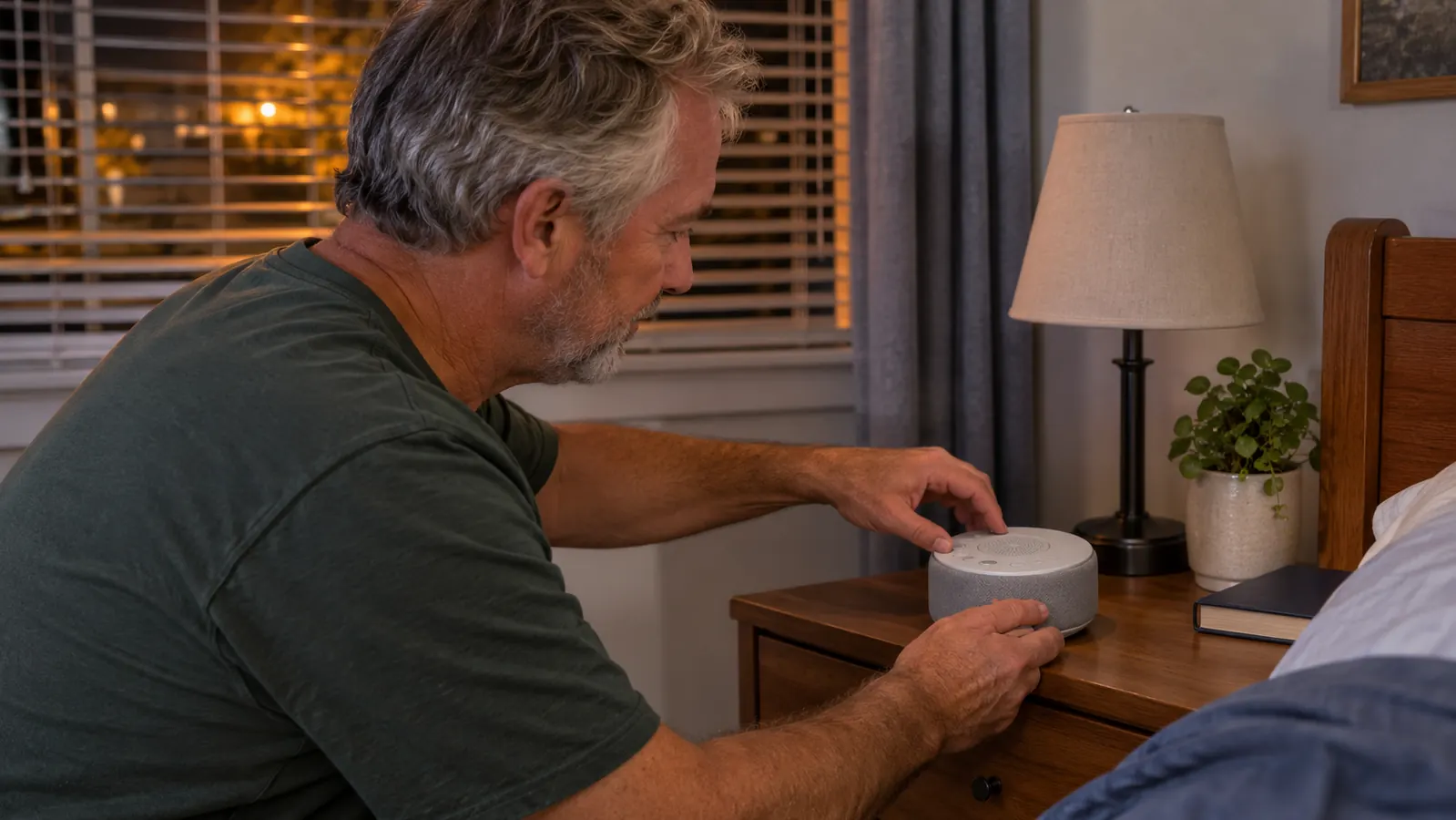
The Marpac Dohm wins on the thing that matters most in a room facing a bus route: the sound itself. It uses a real fan moving air, not a speaker playing a loop. That difference is hard to describe until you live with both. The digital unit sounded fine at first, then my ear found the repeat. The Dohm just sounds like air in a room. It covers the bus, the garbage truck at 5:15 and the neighbor's dog without calling attention to itself.
It also wins on simplicity. There is one switch and two speed settings. I can reach over at 2 a.m. and find the switch by feel. The digital unit has buttons and a display, and even after two weeks I was still pressing the wrong thing. When you are half awake, a menu is a bad idea. The Dohm asks nothing of you. That is worth more than a dozen sound options.
The Dohm wins on all-night operation. It is corded electric and it runs until you switch it off. There is no timer to expire at 3 a.m. and leave you in silence with the bus coming. It weighs 1.6 pounds and sits still on the nightstand. The 7-foot 120V AC cable gives me enough room to place it where I want. The warranty is 1 year limited, which is not exciting, but the unit has been running every night for about three years without a problem.
There is a physical quality to the Dohm that I did not expect to care about. The sound does not feel like it is coming from a small speaker. It feels like it is coming from the room. I do not know how to measure that. I only know that when the digital unit was on Linda's side, I could tell it was a device. With the Dohm, I forget it is there until I turn it off and the bus comes back.
The Dohm did not make me sleep. It made the bus route stop deciding when I woke up.
Where Digital Sound Machine Wins
The digital machine wins on variety. It had several sounds and more volume steps than the Dohm. Linda liked a rain sound for a few nights. I liked an ocean sound for about ten minutes. If you are the kind of person who gets bored with one sound, or if you share a room with someone who has different taste, the digital unit gives you options the Dohm cannot.
It wins on size and travel. The Dohm is 5.75 x 5.75 x 3.25 inches and 1.6 pounds. It stays on my nightstand. The digital unit was smaller and easy to pack. If you travel for work and a hotel air conditioner is not enough, the digital machine is the one you throw in a bag. It also wins on timers. Some people want a machine to shut off after 30 minutes, and the digital unit can do that. The Dohm cannot.
The digital machine also wins on fine volume control. The Dohm has two speeds. That is enough for me, but it is not a dimmer. If you need the sound just above the traffic and no louder, the digital unit gives you more steps. My only issue is that the steps are controlled by buttons I cannot see in the dark. The Dohm has fewer choices, but the choices it has are easy to make at 2 a.m.
The digital machine is also easier to clean around. It is small, so I can lift it with one hand and wipe the nightstand. The Dohm has a cord and a footprint, so I move it less. That is a minor point, but small points add up when you are keeping a bedroom clean. The digital unit also has a headphone jack on some models, which is useful if you share a room and the other person wants silence. The one I borrowed did not have that, but the category does.
If you want one steady sound all night, start with the Dohm
It runs on a cord, has dual speed settings and a single switch. No app, no menu, no timer to expire at 3 a.m. It has been on my nightstand for about three years.
Amazon See the Marpac Dohm Classic on Amazon →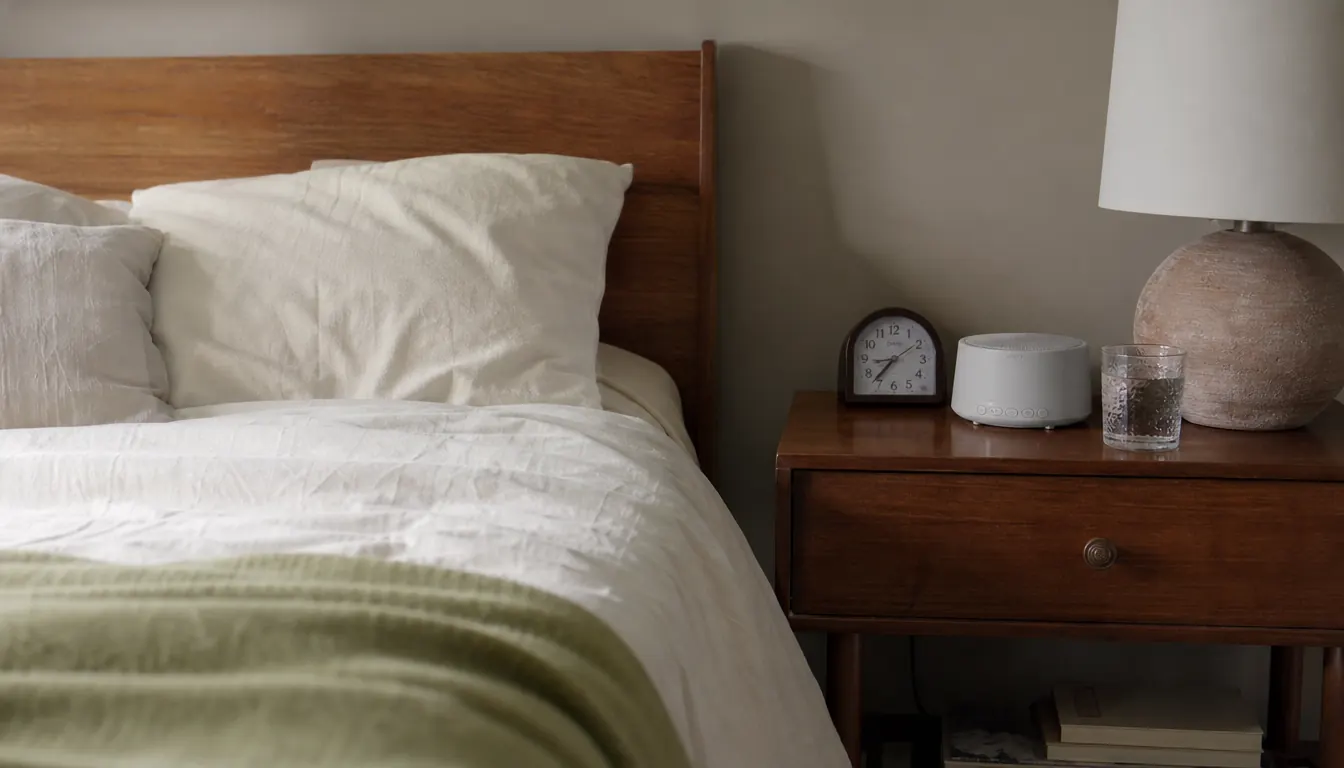
Who Should Buy Which
Buy the Marpac Dohm Classic if your problem is noise you cannot control: a bus route, a snoring partner, a neighbor's early truck, a hallway that echoes. Buy it if you want one sound all night and you do not want to think about it. Buy it if you have a nightstand and an outlet. It is a boring product in the best sense. It does not need an app, a routine or a subscription.
Buy the digital sound machine if you travel, if you like options, or if you need a timer. Buy it if your nightstand is small or if you want to try rain, ocean and fan sounds in the same week. Buy it if you are buying for a guest room and you want something easy to put away. It is the better tool for variety and portability.
If you share a bed, talk about it first. Linda and I both use the Dohm, but she tried the digital unit and liked it for a few nights. The machine that wins is the one you do not argue about at 2 a.m. In our room, that is the Dohm. It faded into the background and stayed there.
If you are buying for a light sleeper who also runs warm, the machine is only one part of the room. Linda runs warm, and we keep her side cooler. The sound machine does not fix temperature. It fixes noise. Do not ask it to do both. That is a mistake I made for years.
What I'd Tell You at 2 A.M.
At 2 a.m., the room is the problem, not your willpower. I spent years trying to sleep through noise that was never going to stop. The Dohm did not make me sleep. It made the bus route stop deciding when I woke up. That is a smaller claim than a lot of sleep products make, and it is the one I can stand behind.
If you snore loudly, wake gasping or fall asleep in the parking lot before a shift, get a home sleep test. My doctor ruled out sleep apnea before I started changing the room. A sound machine is not the answer to that. I am not a doctor. I am a guy who fixed the noise in one bedroom and got about an hour and a half of sleep back.
Buy the Dohm if you want the simplest thing that works. Buy the digital unit if you want options or you travel. Do not buy either one expecting a transformation. Expect a quieter room, a little less 2 a.m. staring at the ceiling and a better chance of making it to 4:45 without a fight.
The last thing I would tell you is to give it a week. Linda noticed the Dohm for about seven nights and then stopped. The digital unit never fully disappeared because the display and the buttons kept asking for attention. A sound machine should be the least interesting thing in the room. The Dohm is. That is why it stayed.
If your room has a noise problem, fix the noise first
The Marpac Dohm Classic is the simple, corded option that runs all night. It has dual speed settings and one switch. It is the one that stayed on my nightstand.
Amazon See the Marpac Dohm Classic on Amazon →