
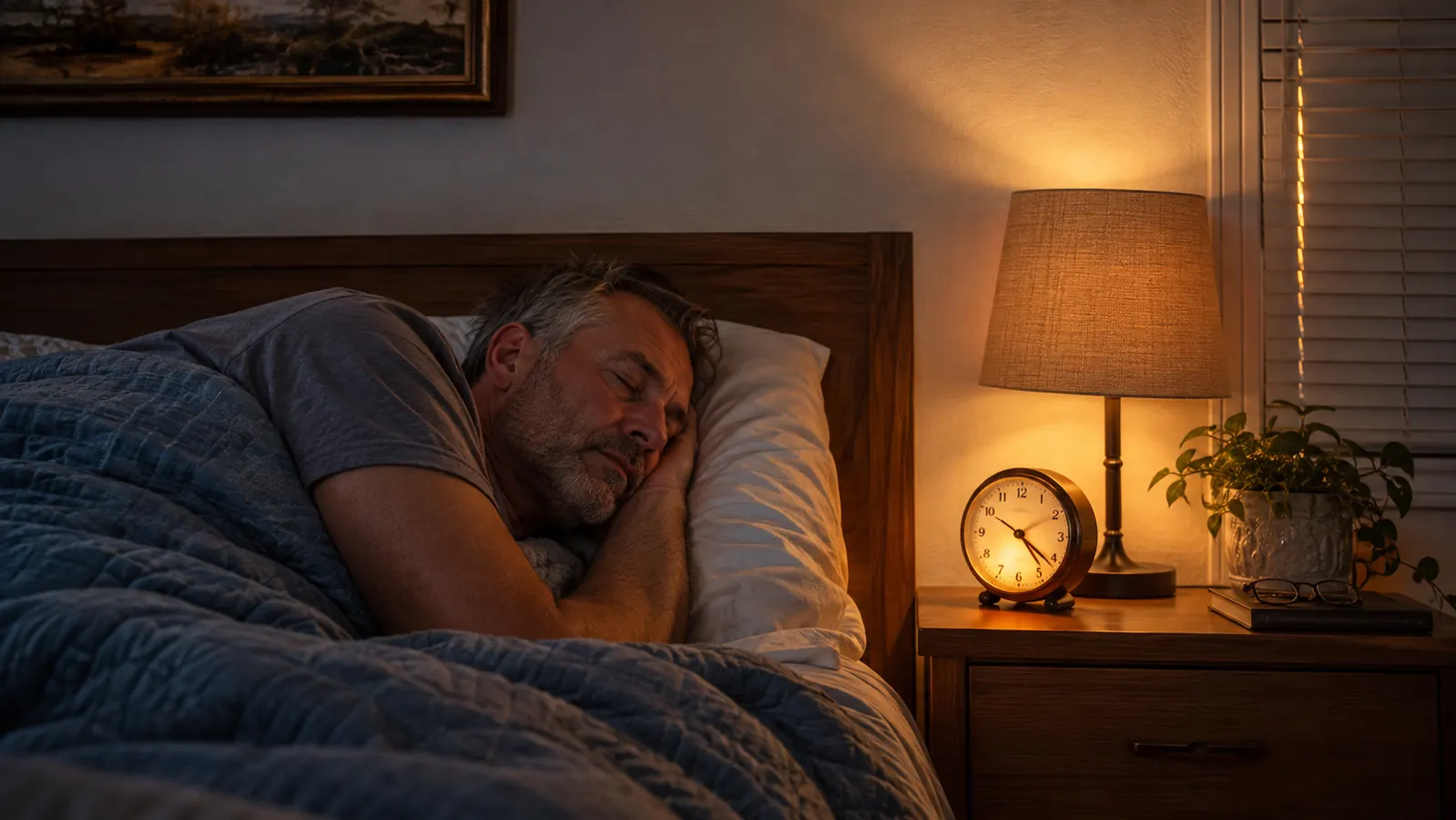
For most of my forties I woke up the same way. A phone buzzing on the nightstand at 4:45 in a bedroom so dark I could not see my own hand. My shift at the hospital in Clifton starts at 6, so 4:45 is not a preference. It is a fixed point. The buzz did exactly what it was built to do, which was pull me out of sleep in one hard yank. Then I would lie there with my heart going and a small, stupid resentment about starting the day already behind.
A year ago I replaced that buzz with a JALL sunrise alarm clock. It sits on my nightstand and starts glowing 30 minutes before the sound ever plays. It changed the first ten minutes of my weekday mornings more than anything else I have tried, and I have tried a fair amount of things. This is what a year of 4:45 wake-ups beside a JALL clock actually looks like, including the parts that annoyed me and the parts I would not pay for again.
The Quick Verdict
The 30 minute sunrise does the waking and the sound stays a backstop, which is the whole idea. The sound library and the FM radio are extras I never touched. Worth it for a dark 4:45. Less useful if your real problem is staying asleep.
Amazon Check Today's Price →The first ten minutes of the day are the ones you can actually fix
I set the sunrise to finish at 4:45 and let the light do the work. If your room is pitch dark when the alarm goes off, this is the piece of gear that changes the morning, not the sound.
Amazon Check Today's Price on Amazon →How I've Used It
Before anything useful, the setup. I am 58, I supervise building maintenance at a hospital, and I am out of bed at 4:45 five days a week. Linda, my wife, is a school librarian and a much lighter sleeper than I am. Our bedroom faces a street with a bus route, and there is a streetlight out there that gets through the blinds no matter what I hang over them. The room also runs warm from June through September, central air or no central air.
The JALL sits on my nightstand on the side away from the white noise machine, roughly an arm's length from my pillow. It is a round tabletop unit, 7.2 inches wide and 7.2 inches tall, and it weighs 1.2 pounds, so it does not crowd out the glasses and the water glass. It runs off USB, which meant plugging it into an adapter I already had on the nightstand. The listing notes one AA battery is required, and I put one in the night I set it up.
The routine is boring, and that is the point. I set a 30 minute sunrise to finish at 4:45, with a soft sound at the end as a backstop rather than a wake-up call. Weekdays get one alarm, weekends get a later one, and the clock keeps those as two separate routines so I am not resetting anything on a Friday night. The sound almost never has to fire. On most mornings I am already sitting up by the time the light reaches full.
The first week was an experiment and I treated it like one. I gave it seven nights before I decided anything, because the first two mornings I noticed the light and that is not the same thing as being woken by it. By the fourth morning I stopped noticing the growing glow and started noticing that I was awake.
What the Sunrise Actually Feels Like
Here is the part I did not expect. The light does not wake me in a dramatic way. There is no moment of clarity. What happens is that somewhere in the last ten or twelve minutes I start surfacing on my own, the way you surface in summer when a room gets brighter, and by the time the sound plays I am already halfway conscious. That gap between half awake and fully awake is where the whole thing lives.
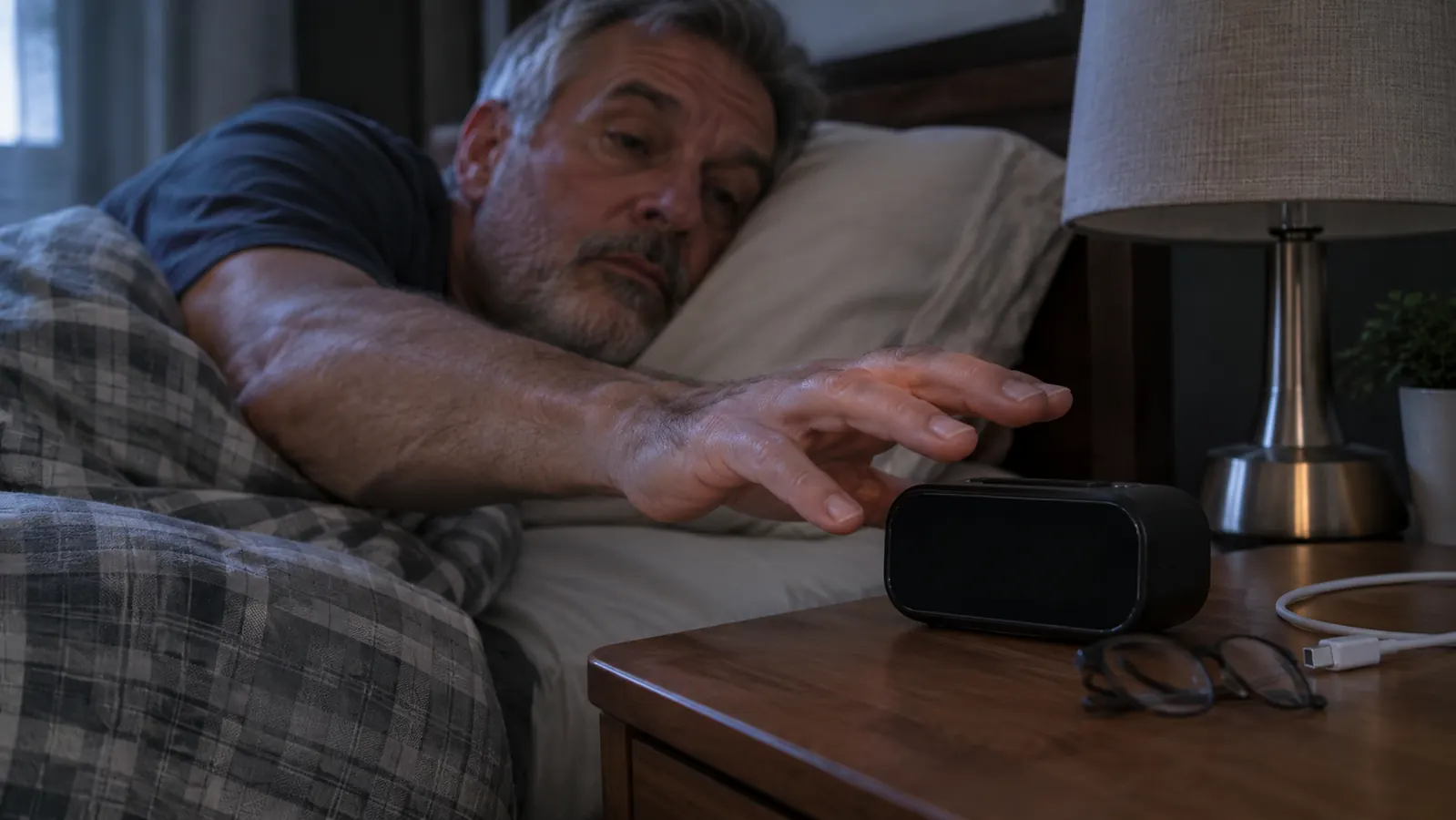
With the phone alarm, the sequence was reversed. I went from dead asleep to heart pounding in under two seconds, and my body spent the next twenty minutes arguing about it. That argument is what I actually got rid of. The clock did not give me more sleep. It gave me a less violent transition into a morning that was going to start at 4:45 whether I liked it or not.
It also quietly solved something I had not thought about, which is that the room is pitch dark in a New Jersey January. Linda gets up later than I do. For years I dressed in the dark and put my shirt on inside out roughly once a week. Now the room is already lit when I stand up, and I have not walked into the bedroom door frame since last winter.
Linda sleeps through most of it. The clock faces my side of the bed and she is on the far side, so what reaches her is a faint glow rather than a face full of light. She has mentioned it twice in a year, both times to say she forgot it was there. From her, that is a rave review.
The Parts I Use Every Night, and the Ones I Do Not
The clock does more than sunrise. There are 25 nature sounds and white noises, 17 light modes, an FM radio, and a sleep timer that runs anywhere from 10 minutes to 480. I will be honest about how much of that I touch. The sleep timer gets used most nights, usually set to 45 minutes, because I read for a while before lights out and I do not want to get up again to switch anything off.
The sound library I use sparingly. There is a soft tone at the end of my sunrise and that is generally it, because we already have a white noise machine doing that job three feet away and I am not going to fix what is not broken. If you do not own a noise machine, the 25 sounds are a reasonable stand-in and they save you a separate purchase.
The FM radio I have used maybe four times. It works fine. I have no use for it. What matters more to me is the LED display, which shows the time in digits I can read from bed without my glasses. In a dark room that display is the brightest thing on the nightstand, and it took me about a week to stop noticing it, the same way you stop noticing a clock radio in a hotel.
The weekday and weekend split is the feature I did not know I needed. Two routines, one for 4:45 Monday through Friday and one for a later weekend time, each set once. On a Friday night I touch nothing. That is a small thing that removes a recurring annoyance, and recurring annoyances are most of what makes an alarm clock bad.
The snooze is adjustable from 5 to 20 minutes. Mine is set tight, and I use it about once a week, usually on the second morning after a hard shift. I want to be clear that this is the part where the clock can work against you. A gentle wake-up with a soft snooze is a much nicer thing to burrow into than a phone buzzer, and it will absolutely let you burrow if you are not careful.
What I Liked
- The 30 minute sunrise does the waking, so the sound at the end is a backstop rather than a jolt
- Weekday and weekend routines are set once and then forgotten
- 25 nature sounds and white noises mean you may not need a separate noise machine
- Sleep timer runs from 10 minutes to 480, which covers a chapter or a whole night
- Snooze is adjustable from 5 to 20 minutes, so you can set it tight instead of nine minutes of drift
- Small footprint for a nightstand at 7.2 by 7.2 inches and 1.2 pounds
Where It Falls Short
- Setup takes an evening with the instructions open; the menu is not obvious
- The LED display is the brightest thing in the room until you adjust to it
- Needs USB power plus one AA battery, so have both before the first night
- Most of the 25 sounds and the FM radio went untouched in a year
- A gentle wake-up makes snoozing more appealing, which cuts both ways
- Does nothing for the reasons you are awake at 2 a.m.
Where It Falls Short
Setting it took an evening. The menu is not obvious, and I had the instructions spread on the kitchen table like I was assembling furniture. Once the two routines were in, I have not had to go back into the menu. But if you are the sort of person who gives up on a gadget in the first twenty minutes, budget an hour and a patient mood for the first night.
Second, the clock cannot make you sleep. For a couple of years before this, my problem was not the wake-up. It was the 2 a.m. wake-up, the one where your mind starts going over a work list and will not stop. The sunrise clock did nothing for that. What helped was the weight of a blanket, a cooler room, and eventually a conversation with my doctor, who sent me home with a sleep test to rule out apnea. I snored for years and I am glad I checked. If you snore loudly and wake up unrefreshed, get that test before you buy a lamp.
Third, it is one more thing drawing power on the nightstand. It is small and it is not greedy, but it is a USB cord, an adapter, and one AA battery, and you want all three in the house before the first night rather than making a trip for a battery at nine o'clock.
And the honest one. A gentle wake-up is easy to abuse. On mornings when I am genuinely wrecked, the clock is a far more comfortable thing to ignore than a phone. I have moved it across the room twice in a year. When it is within reach, I reach.
Four mornings out of five in January I was already out of bed before the sound played. That is not discipline. That is what 30 minutes of gradual light does to a body that has to be up at 4:45 anyway.

What Changed After a Year
The measurable change is small and real. I cannot tell you I sleep more. I sleep about the same, six and a half hours most nights, and that is what it is. What changed is the first ten minutes. No jolt, no heart pounding, no lying there resenting the day before it has started. I get downstairs, make coffee, and I am actually awake when I get there instead of twenty minutes into the drive.
The second change is that Linda notices. She is a light sleeper and she runs warm, so she has opinions about anything that enters the bedroom. Her verdict on the clock is that she forgets it is on. That is the highest compliment a bedroom gadget can earn from her.
The third change is that I stopped using the phone as an alarm entirely. That was the actual goal. The phone now charges in the kitchen overnight, and the bedroom has one less screen in it. That single move did more for my 2 a.m. mind than any device I have bought, and the sunrise clock is what made it possible, because I had something to replace the phone with.
I should be straight about the order of things. The noise machine came first, then a sleep mask for the streetlight, then Linda's cooling pillow, then a weighted blanket, and the sunrise clock came last, about a year ago. It is the newest piece and the one I would replace first if it broke. That is not the same as saying it fixed my sleep. It fixed my mornings.
Who This Is For
This is for the person who has to be up before the sun and who wakes up badly. If you work an early shift, if you catch a 6 a.m. train, if you are up at 4 or 5 in a dark room for half the year, the 30 minute sunrise is the part that matters and it earns its place on the nightstand. The JALL does that part well and the rest of the features are along for the ride.
It is also for the couple where one person gets up first. The light is directional enough that the person on the far side gets a glow rather than a spotlight, and the sound at the end can be set soft enough that it does not become a household alarm.
Who Should Skip It
Skip it if your problem is falling asleep or staying asleep rather than waking up. This is a sunrise and a sound machine. It is not a treatment for insomnia, and no device on a nightstand is. If you are up at 2 a.m. with your mind racing most nights, or if you snore loudly and wake up foggy, talk to your doctor first. I did, and the sleep test was the most useful thing I did in three years of fiddling with that bedroom.
Skip it too if you want a clock you can set in thirty seconds without reading anything, or if you already own a white noise machine you love, because much of what the clock offers is a sound library you will not touch.
If 4:45 comes in a dark room, start the light before the sound
Mine is set to a 30 minute sunrise with a soft tone at the end and two routines I have not touched since the first week. A year in, it is the change I would make first. Check today's price and have an AA battery ready before the first night.
Amazon Check Today's Price on Amazon →