
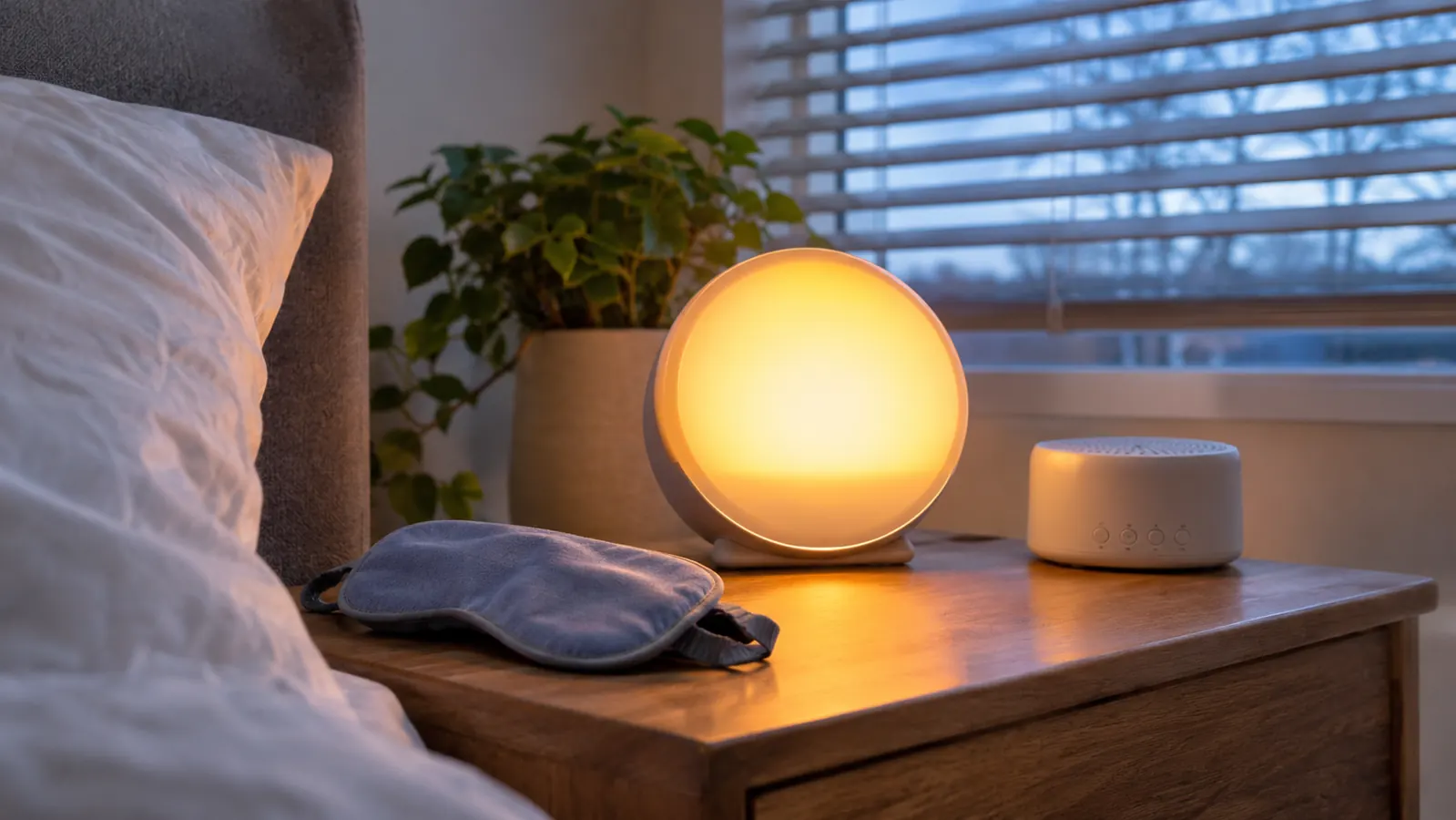
For eleven years my 4:45 a.m. wake-up came from a phone lying face-down on the nightstand, buzzing like something trapped under a glass. I would slap at it, hit snooze twice, and start the day already behind. About a year ago I moved the phone to the dresser across the room and put a JALL sunrise alarm clock where it had been. Same nightstand. Same 4:45. Same 1960s split-level bedroom that faces a bus route in Clifton, New Jersey. I have now slept with both of them, for years on one and for twelve months on the other, and I can tell you exactly which part of each is worth having.
Here is the short answer. The JALL wins on the only thing an alarm is actually for, which is getting you out of bed without a fight. The phone wins on everything else about owning the object. It takes up no space, it travels, and you already know how to work it in the dark. So the real question is not which one is better. It is which failure is currently costing you more: a rough first twenty minutes every morning, or a cramped nightstand and one more thing to plug in.
One more thing before the comparison. If you snore loudly, wake up gasping, or have ever nodded off in a parked car, go get the home sleep test. My doctor ruled out sleep apnea with one about three years ago, and it was the most useful hour I have spent on any of this. No alarm clock on the market fixes apnea, and I would rather say that plainly than sell you a lamp.
| JALL Sunrise Alarm Clock | Phone Alarm | |
|---|---|---|
| How it wakes you | Light ramps from dark to full over a set window, then a soft sound finishes the job | Sound only, at full volume from the very first chime |
| Nightstand footprint | 12.4 x 10.2 x 3.2 inches and 1.2 pounds, tabletop only, and it does not fold | Slips into a pocket or a drawer when you are not using it |
| Travel and one-off alarms | Corded electric, so it stays where the outlet is; the dual alarms cover weekday and weekend routines | Sets a nap alarm in four seconds, anywhere you happen to be |
| What arrives at 2 a.m. | Nothing. An LED display and no connection to your inbox | Every text, alert and update, unless you go hunting through settings |
| Sounds to fall asleep to | 25 built-in nature sounds and white noise, a sleep timer from 10 to 480 minutes, plus FM radio | Needs an app or a stream, which can stop in the middle of the night |
| Snooze | Adjustable from 5 to 20 minutes | Usually fixed at nine minutes, take it or leave it |
| Two different wake-up times | Dual alarms with separate everyday, weekday and weekend routines | Works fine, but you are re-managing it every Sunday night |
| Learning curve | Buttons and a manual; about a week before it is muscle memory in the dark | You have known how to use it for a decade |
How I Compared Them
I did not run a study. I ran a routine. The phone alarm was the only one I had used since roughly 2013, and it sat face-down on the nightstand on the side away from the white noise machine, because the machine is on the street side and I did not want to knock it over at 4:45 in the dark. When I switched, the JALL went into that same spot and the phone went to the dresser. The clock is set to run a thirty minute sunrise before 4:45 with a soft sound at the end of it. That is the whole setup. Nothing clever about it.
Linda is a light sleeper and she runs warm, so two of the things I cared about were not really about me: whether the light reached her side of the bed, and whether the sound at the end of the sunrise made her stir. She works as a school librarian and is up at a more civilized hour than I am, so an alarm that woke both of us at 4:45 was a genuine cost, not a minor annoyance. I also tracked a much dumber thing, which is how many mornings I hit snooze. No app, no sleep tracker. I just noticed.
The first two weeks with the clock were not good. The light came on and I slept straight through it, because I had the sunrise window set short and the ending sound turned down so low that it barely registered. I lengthened the sunrise to thirty minutes and nudged the sound up one step. That is when it started working. I mention this because a lot of people buy one of these, leave every setting exactly where it came out of the box, and conclude the whole idea is nonsense. It is not nonsense. It is a device that needs a week of adjustment, and almost nobody tells you that.
The morning that settled it for me was a Tuesday in February. I was up, dressed and in the kitchen with coffee before 5:10, and Linda was still asleep. With the phone, the buzzing had woken her on most mornings for years, even face-down, even on the lowest volume. I did not need a chart to understand that. I needed one quiet morning to notice how many noisy ones I had been responsible for.
Where the JALL Wins
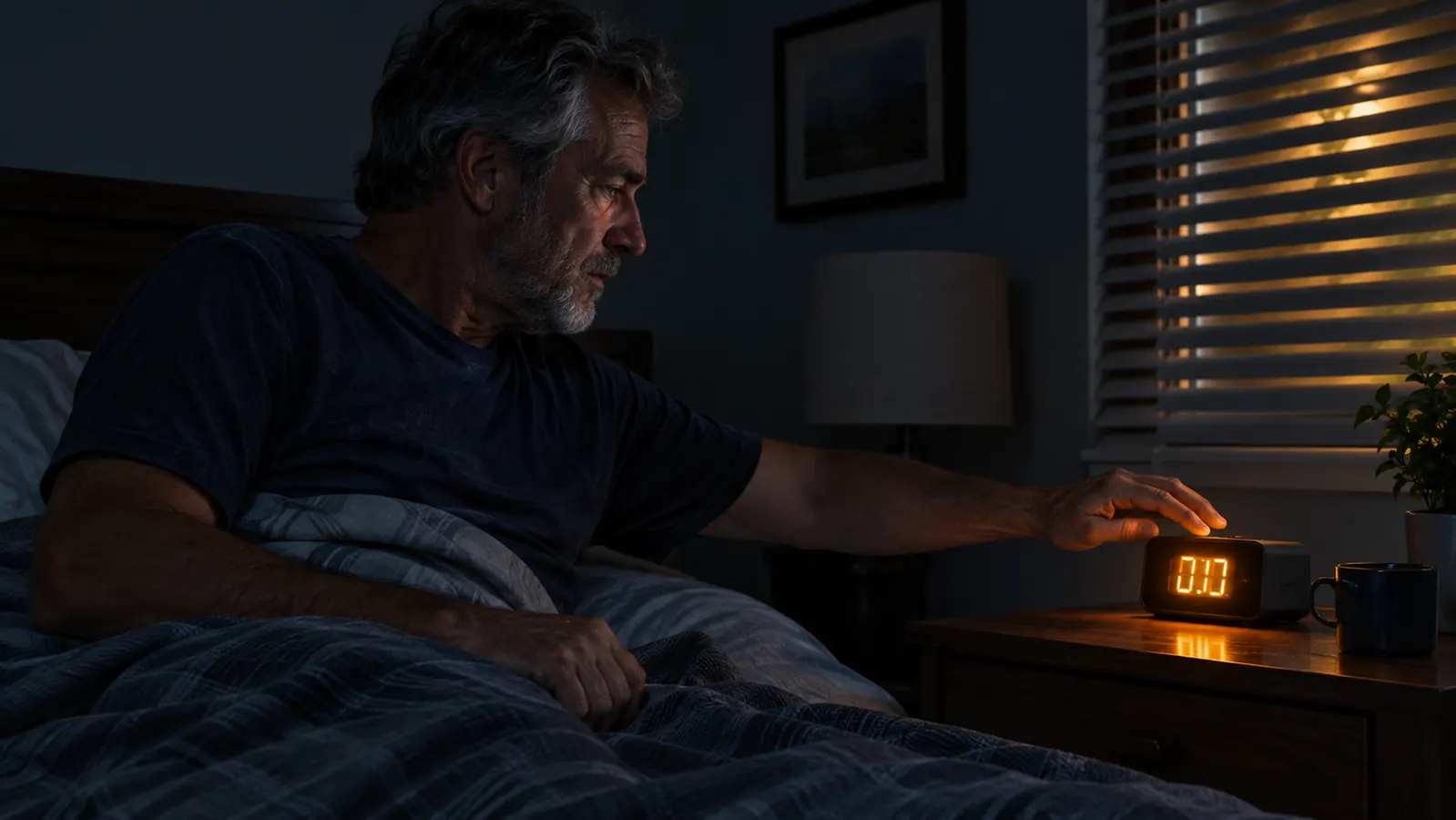
The difference is what happens in the ninety seconds after the alarm. With the phone, the room was pitch dark and the sound arrived at full volume, so my first act of the day was a flinch. With the JALL, the room is already lit by the time the sound comes. I sit up into a room I can see. In December, when it stays black outside until nearly seven, that matters more than it sounds like it should. I am not fumbling for a phone to find out what time it is. The time is on the display, and the display is across the room from my hand.
The second thing it fixed was the phone itself. When the phone was my alarm, the phone was also the first thing I touched, which meant the first thing I read all day was whatever had come in overnight. That is a bad way to start a shift at a hospital. Now the phone stays on the dresser until I have had coffee. Nothing arrives at two in the morning anymore. The clock has an LED display and no connection to anything, so the only thing it can tell me is the time, and it tells me that from four feet away without me picking it up.
Then there are the smaller wins, and I will keep them short because they are already in the table. It has twenty-five built-in nature sounds and white noise with a sleep timer that runs from ten minutes up to eight hours, so on the nights the bus route is loud I use one of those instead of dragging the phone into bed with me. It has dual alarms with separate everyday, weekday and weekend routines, which means Sunday night does not involve resetting anything. And the snooze is adjustable from five to twenty minutes, the first snooze I have ever had that did not feel like it was designed by someone who wanted me to be late.
The honest note on the extras: there are seventeen light modes and I use two. There is an FM radio and I have used it maybe three times, once by accident at 4:40 in the morning. If you are the kind of person who will spend a weekend programming every setting, this thing will keep you busy. If you are like me, you will find one sunrise window, one ending sound, one night sound, and you will leave the rest alone. That is fine. The extra modes cost you nothing but a little scrolling through the manual.
In eleven years of phone alarms I hit snooze twice on most mornings. With the light coming up half an hour before 4:45, I hit it about once a week.
Where the Phone Wins
The phone wins on space, and in a real bedroom that is not a small thing. The JALL is 12.4 by 10.2 by 3.2 inches and weighs 1.2 pounds. It sits on a tabletop and it does not fold up. My nightstand already holds a sleep mask and a white noise machine, and adding a clock meant rearranging all of it. If your nightstand is currently a stack of books and a lamp, adding a dedicated device is a real trade, and you should go into it knowing that.
It also wins on travel and on the one-off alarm. The clock is corded electric, so it lives where the outlet is. The phone comes with me. And I still use the phone for the nap alarm after a rough shift, when I put the sleep mask on for forty minutes and need to be up at a specific time that is not 4:45. Setting that on a phone takes four seconds. Setting a one-off time on the clock means thinking about which alarm I am changing and whether I have just wrecked my weekday routine. I have done exactly that. It is annoying every time.
Last, the phone is not plugged into the wall, and that is worth a thought before you buy. If the outlet goes dead in the night, the clock is not going to behave the way it does on a normal morning. Your phone will still be there. That happens maybe twice a year in this house, but it is a real difference and it belongs in an honest comparison. The phone also wins on familiarity. I have been setting alarms on a phone for over a decade. The clock took about a week before I could find the right button in the dark without turning on the radio by mistake.
The First Ninety Seconds of Your Day Are the Ones Worth Fixing
The JALL runs a sunrise before your alarm and finishes with a soft sound, so the room is already lit when you sit up. 25 nature sounds, dual weekday and weekend alarms, and a snooze you can set from 5 to 20 minutes. Give it a week and adjust the settings before you judge it.
Amazon Check Today's Price on Amazon →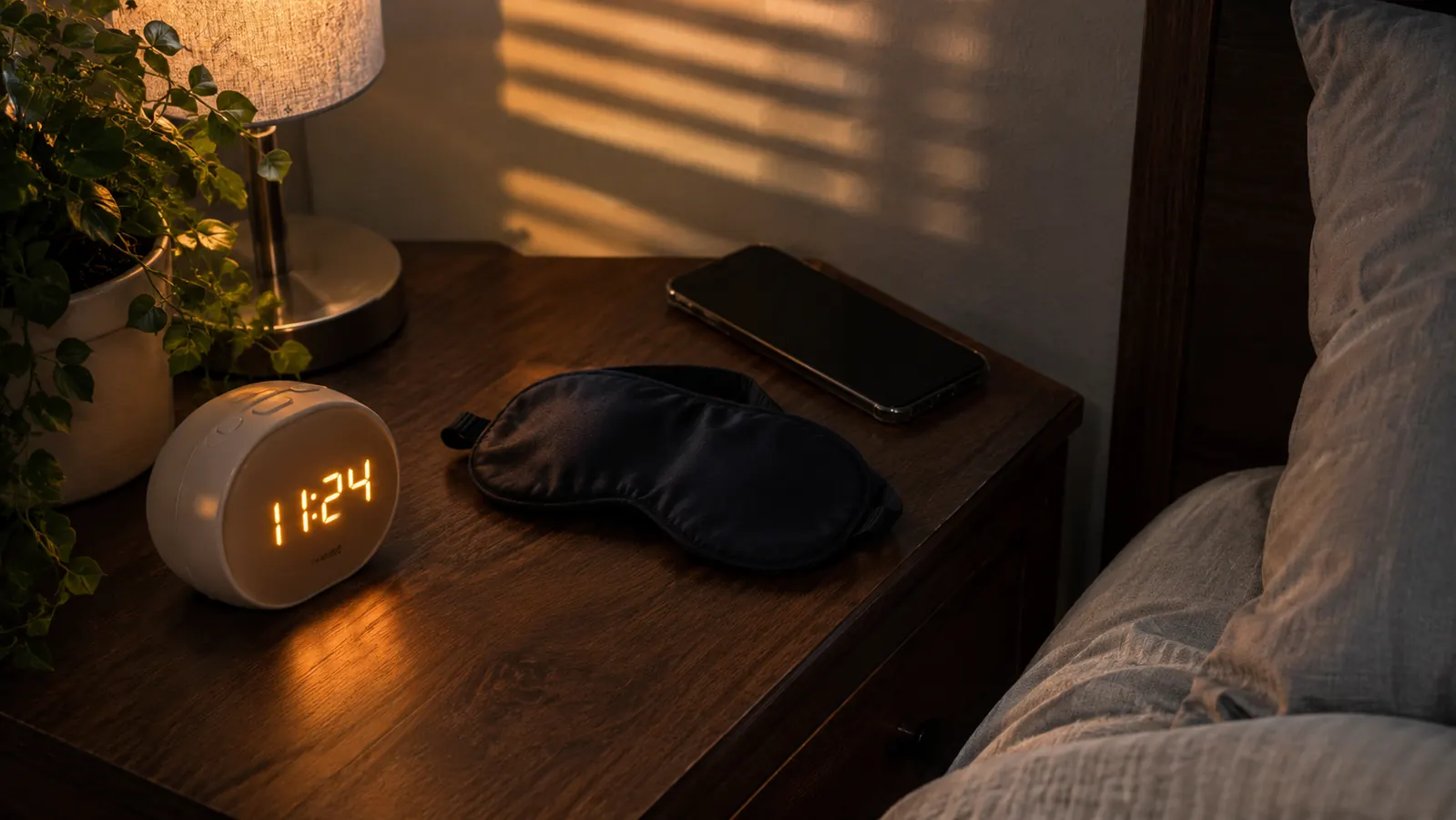
The Thing Neither One Fixes
Neither of these devices did anything for the part of my sleep that was actually broken, which was the two in the morning wake-up. That was a racing mind, and what helped was a different purchase entirely, a fifteen pound weighted blanket that took me four nights to get used to. Neither one does anything about the streetlight coming through the blinds, which is what the sleep mask is for. Neither one does anything about a bus route outside the window, which is what the white noise machine is for. An alarm clock is a morning tool. It touches the last five minutes of the night, not the eight hours before it.
I say this because it is easy to buy a sunrise clock expecting your sleep to change, and then be disappointed when you still wake up at two. The clock did one thing well. It made 4:45 less hostile. That is worth a device on the nightstand if 4:45 is the worst part of your day, and it is worth nothing at all if your actual problem is falling asleep in the first place. Fix the falling asleep first. Then fix the waking up.
Who Should Buy Which
Buy the JALL if three things are true. You wake in a dark room. Your current alarm makes you flinch, or it wakes someone else in the bed. And the phone on your nightstand is costing you something, whether that is scrolling at 4:40 in the morning or a notification that pulls you out of a good stretch of sleep at two. If all three of those are true, the clock earns the space it takes up. Give it a week before you decide, lengthen the sunrise, and move the ending sound up until it actually reaches you.
Keep the phone, or keep using it as the backup, if your mornings are already decent and your only complaint is nightstand clutter. Keep it if you travel and need an alarm that comes with you, or if you take naps on an unpredictable schedule and need one-off alarms more than you need a routine. A phone is a good alarm. It is a terrible thing to wake up holding. That is the whole distinction. If you can set it, put it face-down across the room, and leave it there until you are vertical, you have most of the benefit without buying anything at all.
There is also a middle path, and it is the one I actually live in. The clock handles the weekday 4:45. The phone handles naps, travel, and anything that is not a routine. Neither one has to win outright. What you are buying with a sunrise clock is not a better alarm. It is a different first minute of the day. That is worth something only if the first minute you have now is bad enough to be worth changing, and you are the only one who can answer that.
Start With the Four Minutes After the Alarm
You do not have to rebuild a bedroom in a weekend. Moving the phone off the nightstand was the change that stuck for me, and it stuck because the replacement did the waking up. See the current price, check the dimensions against your own nightstand, and give yourself a week of mornings.
Amazon Check Today's Price on Amazon →