

Honest review, and I'll start with the part that isn't flattering: the JALL sunrise alarm clock did not change my life. It changed my mornings, which is a smaller and more useful thing. I bought it about a year ago because the alarm on my phone went off at 4:45 like a fire drill in a shoebox, and my wife Linda, who is a light sleeper and sleeps warm, would come up off the mattress like she'd been bitten. I work building maintenance at a hospital in Clifton, New Jersey. My shift starts at six. That means I am awake in a dark room during the dark half of the year, every weekday, whether I like it or not. What I wanted was to be woken up instead of ambushed.
Here is the part the listing photos leave out. A sunrise alarm is not a gentler alarm. It is a longer one. The light starts climbing thirty minutes before the sound, which means my wake-up begins at 4:15, not 4:45. The first week that felt like a downgrade and I nearly boxed it back up. By the second week I was surfacing on my own a couple of minutes before the tone, and that groggy half-awake minute is the entire product. If you want to stay dead asleep until the last possible second, this is the wrong machine for you.
I am not a doctor and I'm not going to pretend a clock treats anything. My own doctor ruled out sleep apnea with a home test about three years ago, and if you snore hard enough that your partner leaves the room, get that test before you spend anything on a nightstand device. What follows is one year, one bedroom, one nightstand, one clock. That's the entire basis for my opinion.
The Quick Verdict
A real improvement for a dark-room 4:45 wake-up in a shared bedroom, as long as you can spare the nightstand space and you start the sunrise earlier than feels reasonable.
Amazon Check Today's Price →If your 4:45 already feels like a fire drill, this is the fix
The JALL ramps light for the half hour before the sound, so your body gets a head start on the alarm instead of a shock.
Amazon Check Today's Price on Amazon →How I've Actually Used It
The clock sits on my nightstand on the side away from the white noise machine, which matters more than it sounds like it would. I set the sunrise to run thirty minutes before 4:45, with a soft tone at the end instead of anything that beeps. Weekdays only. The weekend alarm is set an hour and a half later, and in eleven months I have never once been awake to hear it start.
Setup took one evening and one trip back to the manual. The clock runs off a USB cord, so the first practical question is whether your nightstand is anywhere near an outlet. It also takes one AA battery, which I dropped in and then forgot about. The body is plastic, the display is LED, it measures 12.4 by 10.2 by 3.2 inches, and it weighs 1.2 pounds. That sounds like nothing until you set it down beside a lamp and a glass of water and realize it has claimed a third of the table.
The outlet situation is worth spelling out. My nightstand sits about two feet from the wall on the street side, and the nearest receptacle is behind the bed, low, where you have to lie on the floor to reach it. I ran the USB cord along the baseboard and tucked the slack behind the table leg. It took ten minutes and a flashlight. If your outlet is across the room, budget for an extension cord, because the cord that comes with the clock is not built for a long run.
The first three mornings I woke up annoyed at the light. It seemed too dim to be doing anything, and I lay there waiting for the sound like a man waiting for a bus. Then on the fourth morning I came up out of sleep on my own about two minutes early, which is a strange thing to notice and a good thing to notice. A year on, that's still how most weekdays go.
I did keep a small tally for the first month, mostly because I didn't trust my own memory. Fourteen of the first twenty weekdays I was awake or nearly awake before the tone played. In the month before I bought it, that number was closer to four. Nothing else in my routine changed during that stretch. Same bedtime, same white noise machine, same early shift. That's not a study, it's one man with a pen, but it's the reason the clock is still plugged in.
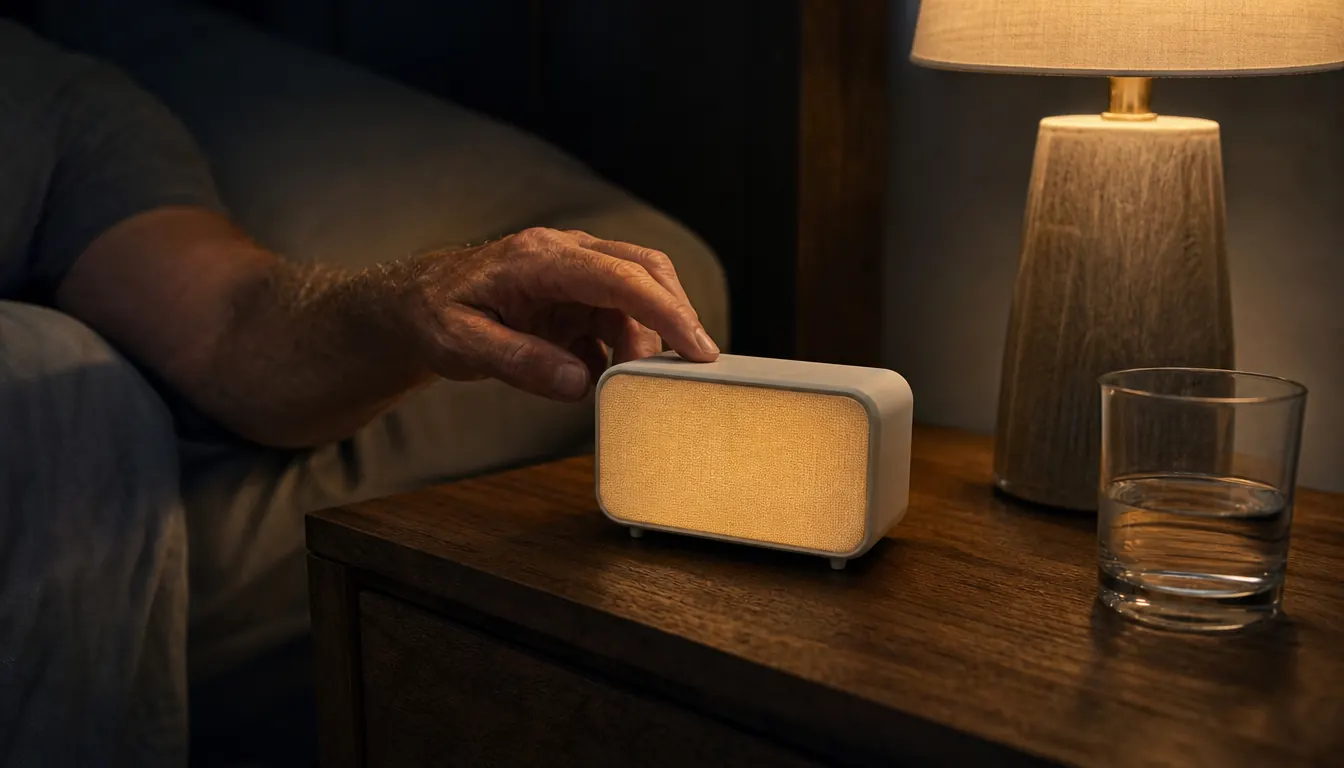
The Light Is the Point, and It Works
The listing calls it a full-screen sunrise simulation, and that's accurate in the way that matters: the whole panel comes up, not a strip along one edge. It travels from dark to full over whatever window you set, so the room itself changes rather than a lamp switching on. There are 17 light modes and I have used three. One is the sunrise. One is a low steady glow I use on the days I'm up early and don't want to flip the ceiling light and wake Linda. The rest are colors and variations I poked at once and left alone.
The top end of the ramp is brighter than I expected. For the last few minutes it's bright enough to see the floor by, and in December that is the difference between a decent morning and a bad one. My bedroom faces a street with a bus route, so there's already light leaking around the blinds from the streetlamp. The clock's light comes from the table instead of the window, and somehow that reads as morning rather than as a streetlight.
The real test came in January, when the room is coldest and darkest and my body wants no part of 4:45. That was the month I expected to give up on it. Instead the ramp became the thing I leaned on, because the light was already working before I had to make any decision about getting up. In summer I notice the clock less. In winter it earns its space on the table.
Honest limitation: the light does nothing for a room that's already bright. If you sleep with a curtain cracked open or the hallway light on, you'll get less out of this than I do. It's a tool for dark rooms. That's the entire trick, and it's a good trick, but it's only one trick.
The 17 modes are the part I'd change. I understand why a manufacturer adds them; they look good in packaging and they fill out a spec sheet. In practice, three is the number a person uses, and the other fourteen exist to be cycled past. Putting the sunrise on one obvious setting and leaving it there is the move. You are not going to become someone who changes their wake-up light color on a Tuesday.
I went through a phase of using the low steady glow as a night light for the walk to the bathroom at 2 a.m., which lasted about a week. It's too bright for that, at least in a room this size, and I stubbed my toe on the cedar chest at the foot of the bed anyway. The glow is for the ten minutes between waking and getting dressed. That's the honest use for it.
The Sounds: 25 Options, and I Use One
There are 25 nature sounds and white noise options, plus FM radio. I use one. It's a soft tone that builds over about a minute, and it has not once made Linda sit up. I tried three or four of the others out of curiosity, including the birds, and the birds are fine if you happen to like birds at a quarter to five in the morning. The FM radio I tested exactly once, confirmed it worked, and switched off, because a radio ad at that hour is a specific kind of cruelty.
I settled on the soft tone after trying the birds and one that sounded like rain on a roof. The rain one was pleasant and completely useless, because it blended into the white noise machine and I couldn't tell whether it was the alarm or the machine. A wake-up sound has to be distinct from the background or it isn't a wake-up sound.
The sleep timer runs from 10 to 480 minutes, which is a wider range than most. I don't use the clock to fall asleep. I already have a white noise machine that runs all night and I'm not going to fix something that isn't broken. But if you're buying this as a two-in-one and you want the sound to fade out after you drop off, that range covers everything from a nap to a full night, and the low end genuinely covers a nap.
The snooze adjusts from 5 to 20 minutes, and that's the setting I'd change on day one. A short snooze on a sunrise clock is a trap. You get the light, you take nine more minutes, and you've undone the entire point of waking gradually. Mine is set to 12 minutes and I use it maybe twice a month, usually in January when the room is at its darkest.
One thing I'd tell a friend: pick your ending sound before you fuss over light modes. The light is forgiving. A tone you dislike at 4:45 is the thing that will make you resent the clock by March.
The Details Nobody Puts in the Listing
The footprint. 12.4 by 10.2 by 3.2 inches is a real object on a nightstand. If your table is already holding a lamp, a phone, a glass of water and a white noise machine, you're going to rearrange things. I moved my phone to the floor. That turned out to be a bonus, but it was not the plan.
The cord. It's USB powered and corded, so it lives where the outlet is. There is no version of this where you toss it in a suitcase and it just works. When I travel I take my sleep mask and my earplugs and leave the clock home, and I notice the difference by the second morning.
The display. It's an LED panel and it sits about three feet from my head. A lit panel at eye level in a dark room is the exact thing I bought a sleep mask to escape two and a half years ago. I angled the clock slightly away from the bed and it stopped bothering me inside a week. If you're sensitive to light in the room, think about that before you buy, because you can't make the panel not exist.
The alarms. You can set separate weekday, weekend or everyday routines, and it took me two passes through the manual to get it. The first time through I set both alarms to the same time and then couldn't work out why nothing had changed. Once it clicked it stayed clicked. I have not touched the weekday alarm since February.
The plastic. The body is ABS plastic and it looks like ABS plastic. This is not a piece of furniture, nobody is going to compliment it, and mine has been on the same nightstand for a year without a scratch. At 1.2 pounds it hasn't wandered off the table either, which is more than I can say for the phone it replaced.
Living With It in a Shared Bedroom
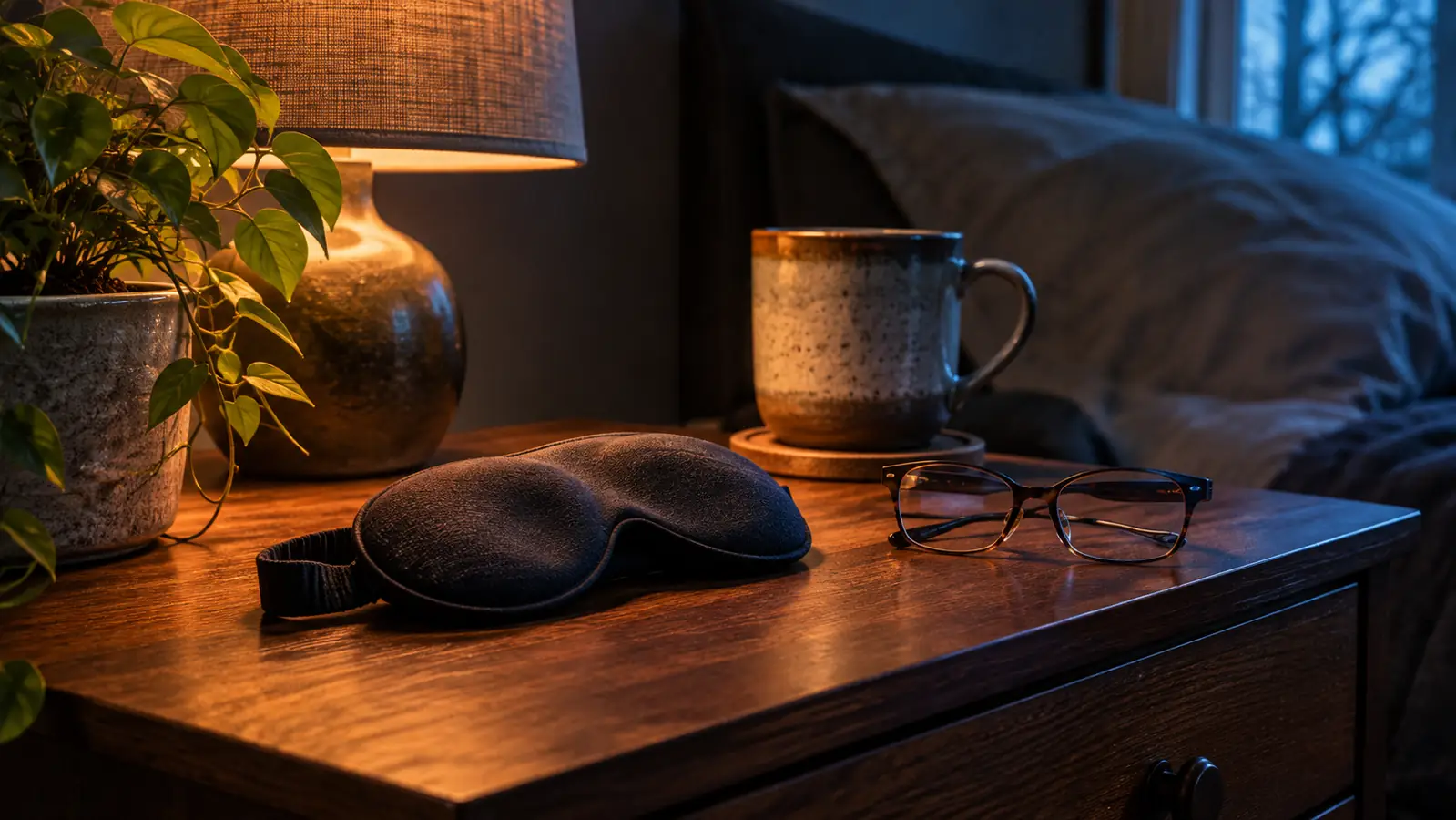
This is the part I actually care about. Linda is a light sleeper and she runs warm, so she has her cooling pillow, her side of the room, and a low tolerance for noise before five in the morning. My old phone alarm woke her every single weekday for years. The JALL wakes her maybe once a week, and usually only when she's already stirring. The light faces my side. The tone doesn't carry.
That's worth more than the light itself, if I'm honest. The reason I kept the clock past the first month wasn't that I felt marvelous at 4:45. It was that Linda stopped flinching at 4:45 and the morning stopped being a small daily grievance. If you share a bed with someone who wakes easier than you do, that alone may be the case for buying one, and it's the reason I'd buy it again.
Linda's test was simpler than mine. I asked her in March whether she'd noticed the alarm that week. She thought about it and said she'd noticed it on the Monday, and that was it. Three months earlier the answer would have been every day, and with feeling.
One more note on a shared room: being able to set the weekend alarm separately turned out to matter more than I expected. Saturday morning sounds different from Tuesday morning in this house now, and neither of us has to remember to reset anything on Friday night.
What I Liked
- The full-screen sunrise ramps over whatever window you set, so you're half awake before the sound starts
- The ending tone is soft enough that my wife sleeps through it most weekdays
- Snooze adjusts from 5 to 20 minutes, long enough to be useful without wrecking the point
- Sleep timer runs from 10 to 480 minutes, so it covers naps and full nights
- Dual weekday and weekend alarms can be set separately and stay set
Where It Falls Short
- It measures 12.4 by 10.2 by 3.2 inches and takes real nightstand space
- USB corded only, so it does not travel with you
- 17 light modes and 25 sounds is more choice than any one person needs
- The plastic body looks like plastic
- It needs a reasonably dark room to do its best work
Linda stopped flinching at 4:45 and the morning stopped being a small daily grievance. That was worth more to me than the light itself.
Who This Is For
You'll get your money's worth if you wake before the sun, in a dark bedroom, and you're tired of being yanked out of sleep by a noise. It suits heavy sleepers who need a long runway. It suits light sleepers who share a bed with one. It suits anyone whose nightstand sits near an outlet and has room for something roughly a foot across. And it suits the person I was a year ago: 58 years old, up at 4:45, five broken hours a night through most of my forties, trying one change at a time instead of buying a whole new life.
Who Should Skip It
Skip it if your bedroom is bright when you go to bed, because a sunrise cannot out-light a streetlamp through open blinds. Skip it if the alarm needs to be portable, because the cord, the AA battery and the size all say tabletop. Skip it if you want to stay asleep until the last second, because a thirty minute sunrise is by design a thirty minute wake-up. And skip it if you're hoping a clock will fix loud snoring, insomnia that won't quit, or waking up gasping. That's a doctor conversation and a home sleep test. Mine came back clear, which is the only reason I'm writing about clocks instead of a CPAP machine.
Start the sunrise earlier than feels reasonable
Mine runs thirty minutes before the 4:45 tone. The first week feels like a downgrade. The second week doesn't.
Amazon Check Today's Price on Amazon →